There is a pattern we keep seeing when someone searches for a rose picture to print. The top results are not pictures of roses. They are listings — thousands of them — selling the same handful of 19th century plates, cropped slightly differently, with watermarks painted out and a new signature painted in. We restore botanical plates for a living, chiefly from O.W. Thomé's Flora von Deutschland, Österreich und der Schweiz, published in 1885 and squarely in the public domain. We know what the files look like before they are laundered, and we know what happens to them after.
The Public-Domain Laundromat Nobody Names
The same hundred-odd 19th century plates circulate across tens of thousands of listings, re-cropped and re-signed by people who did not draw them, scan them, or in many cases ever hold the printed book in their hands.
Here is how it works, mechanically. Someone, years ago, scanned a page from Thomé's Flora von Deutschland or a comparable fin-de-siècle work — Köhler's Medizinal-Pflanzen, Lindman's Bilder ur Nordens Flora, Redouté's Les Roses in a lower-grade reprint — and uploaded it to a public archive. That file is lifted, cropped, lightly cleaned in Photoshop, exported as a JPEG, and listed on a print-on-demand marketplace. The next seller buys the listing's product photo, not the file, matches it against a free archive scan, and re-lists it. By the fifth hop, nobody knows which generation of the file they are selling, and the per-print cost sits around four dollars while the retail price sits around forty.
Thomé's 1885 Flora is one of the most laundered botanical works in print-on-demand because the plates are clean, continent-wide in subject matter, and the entire run is unambiguously public domain. The images we restore ourselves — the Chamomile plate, the Common Ivy, the Cornflower, the Fennel — turn up on Etsy under at least a dozen different studio brandings each. The chromolithograph plate for Centaurea cyanus, our cornflower, is also sold as "Danish cornflower artwork," "British botanical print 19th century," and "Victorian wildflower illustration" by sellers who have never been to a herbarium.
The thing nobody names in the listing copy is that the buyer never sees the source file. The buyer sees a styled product photograph of a frame on a bedroom wall. When the actual print arrives and the stippled petal texture reads as a soft brown fog, the return rate is a shrug and a restocking fee. For roses specifically, this problem compounds, because the public-domain rose canon — chiefly Redouté's work from 1817 to 1824 and a handful of later popular floras — is the single most trafficked botanical subject on the internet, and almost none of the files in circulation came from the archive at the resolution claimed.
The Resolution Lie That Prints At A4 And Dies At A2
The listing says "giclée print, archival paper, museum quality," and the file behind it is twelve hundred pixels wide.
The arithmetic is unforgiving. At 300 DPI, a clean print at A4 requires 2,480 pixels across the short side; A3 needs 3,508; A2 needs 4,961; A1 needs 7,016. A respectable share of the "vintage botanical" files circulating in marketplaces are between 1,000 and 1,800 pixels wide, pulled from thumbnail scrapes of Wikimedia Commons, decade-old Flickr archives, or early Biodiversity Heritage Library web galleries from before the full-resolution scans were posted. Those files are then run through Topaz, Gigapixel, or a similar neural upscaler and listed as "high resolution" without further qualification. At A4 the trick is invisible — four inches of paper will hide anything. At A2 the botanical texture collapses into mush.
The texture is what the plate is. A 19th century botanical lithograph is stipple and crosshatch. The thing that makes the leaf look like a leaf is not the color, it is the smallest marks. When an upscaler is asked to invent pixels between those marks, it synthesizes smoothness and the dots turn into smoke. A real 1885 chromolithograph also carries the dot pattern of the lithographic stone itself — the micro-grain of the limestone surface — which is not noise, it is part of the historical image. Preserving it requires scanning at 1,200 DPI or higher and delivering, after restoration, at a minimum of 600 DPI across the printed intention. Rose plates in particular punish shortcuts, because the fine thorn texture and petal vein work either resolve or they do not. There is no middle setting.
The practical test is simple. Before paying for any botanical print above A4, ask the seller for pixel dimensions. A truthful seller gives numbers. An evasive seller writes back about "optimized output for your chosen frame size," which is a sentence that means nothing. When we restore a plate ourselves, we scan at 1,200 DPI from a physical source, correct the paper tone, repair foxing and the plate-mark creases without redrawing the illustration, and output a file that prints cleanly to A1. That is a very different object from a 1,500-pixel JPEG that was upscaled past the point of honesty.
If the file could not have been printed in 1885, calling it an 1885 print is a lie that happens to be legal.
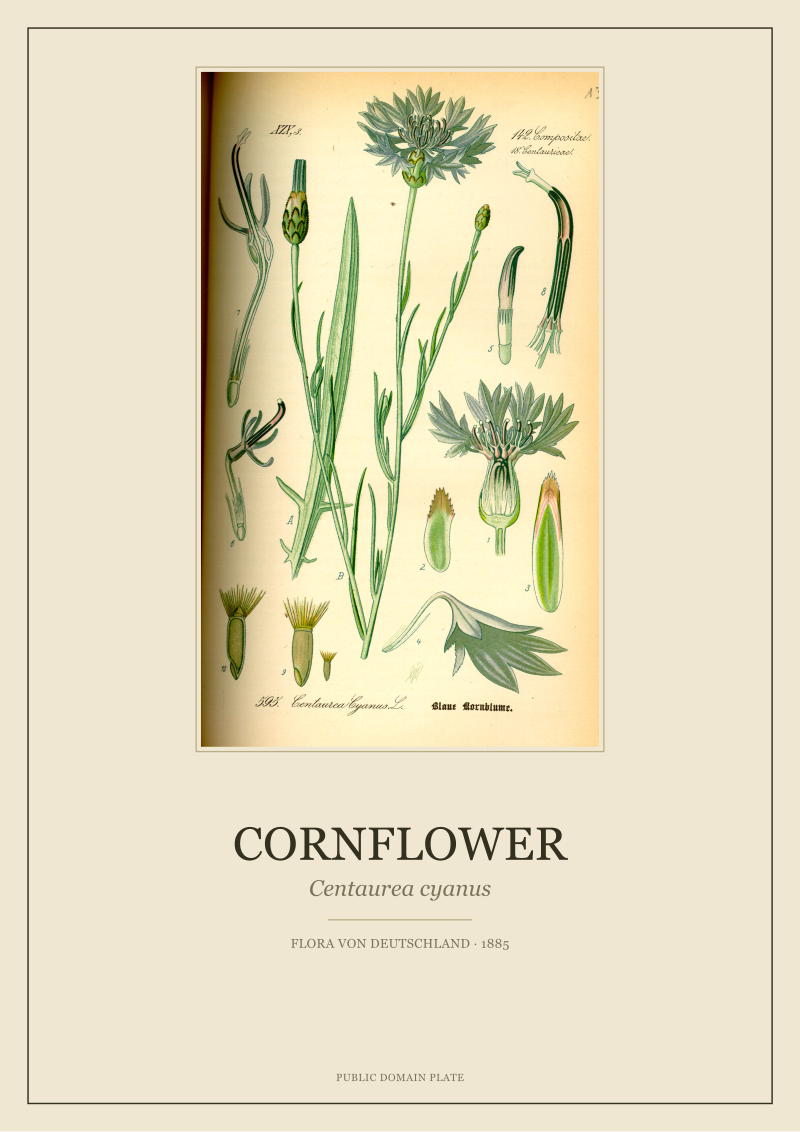 Cornflower
The print from this article · from €29.95
View the print →
The Color That Was Never In The Plate
The third pattern is the easiest to spot once you know what to look for: the colors in the sold version are brighter than any press in 1885 could produce.
Chromolithography in the late 19th century used six to twelve lithographic stones per plate, each inked with a single pigment and printed in registration over the previous ones. The available pigments were earth-and-vegetable: alizarin crimson, chrome yellow, Prussian blue, a few vegetable greens, a bone black, and lead white, all muted by the paper's own warmth. A rose rendered through that process lands in the 50 to 70 percent saturation range, with pink that reads as cool-rose rather than hot-pink, and reds that have a slightly brown shoulder to them. Thomé's plates share this palette signature. The Cornflower plate, Centaurea cyanus, is a cool violet-blue, not an electric cornflower-blue; the Chamomile, Matricaria chamomilla, is a soft lemon-cream yellow, not a chrome yolk; the Common Ivy, Hedera helix, is a bluish forest green, not a lawn green.
What happens in resale is predictable. The seller opens the scan in Lightroom, pushes vibrance up by thirty or forty, drops the black point to make the image feel punchy, and exports. On Pinterest, the saturated file wins. Pinterest's algorithm rewards contrast, and the saturated version gets saved to more boards, so the saturated version is the one that proliferates. Within two years the laundered JPEG is the dominant file in circulation and the original — the thing the illustrator actually drew — is the obscure one. For roses the distortion is severe, because the subject itself is pre-loaded with associations that pull sellers toward sentimental color choices that no 1885 press ever made.
Our restoration rule, held firmly, is to match the printed book rather than the plate's hypothetical ideal. The public domain gives us the printed artifact — ink on paper, 140 years old, with the specific chromatic signature of the press that made it. That is the historical object. Repainting it in saturated modern pigments produces a new work in bad taste that trades on the authority of the old. The plate's quietness is the point. If a vintage rose plate for sale has colors that could not have been mixed in 1885 pigments, the file is not a restoration; it is an edit that benefits from historical cosplay.
So What Do You Actually Do
Go to the actual source. The Biodiversity Heritage Library at biodiversitylibrary.org hosts clean high-resolution scans of Thomé's Flora and most comparable 19th century works. For roses specifically, Pierre-Joseph Redouté's Les Roses, published between 1817 and 1824, lives at the Bibliothèque nationale de France on Gallica at the archive's full resolution. Botanicus, maintained by the Missouri Botanical Garden, and Wikimedia Commons have overlapping holdings and sometimes a cleaner scan of a given plate than the one on BHL. None of them charge. Downloading the TIFF or the maximum-resolution JPEG from one of those archives puts you ahead of ninety-plus percent of marketplace sellers immediately.
Then do the arithmetic. Multiply your intended print size in inches by 300. That is the minimum pixel count you need on the short side, with a comfortable margin for cropping and the small resolution loss introduced by any color correction you do. If you cannot see the pixel dimensions of a file before paying for it, the file is not for sale honestly. The second check is a color check: open the archive scan next to the version being sold and look at the restraint of the hues. If the sold version is more saturated than the BHL scan, you are not getting a restoration, you are getting an edit that will clash with any thoughtful room on the wall of which it is hung.
Our own studio restores a specific set of plates from Thomé's 1885 Flora — chamomile, ivy, cornflower, fennel, and a growing shelf of their neighbors — and our commercial inventory at /shop/ reflects that scope. Roses are not among the plates we currently restore, which is why this piece is advisory rather than promotional on this specific query; recommending that readers go to Gallica for Redouté costs us nothing because we do not sell what Gallica is holding. This piece did not address framing, where acid-free matting matters more than most buyers assume. It did not address paper selection, where hot-press cotton rag and cold-press cotton rag produce visibly different results on stippled plates. And it did not address the specific question of how chromolithographs age differently under UV-filtered glass than engravings do. Each is its own argument. What we can tell you here is which direction to walk if you want a real rose on your wall rather than a laundered JPEG with a new signature in the lower right.
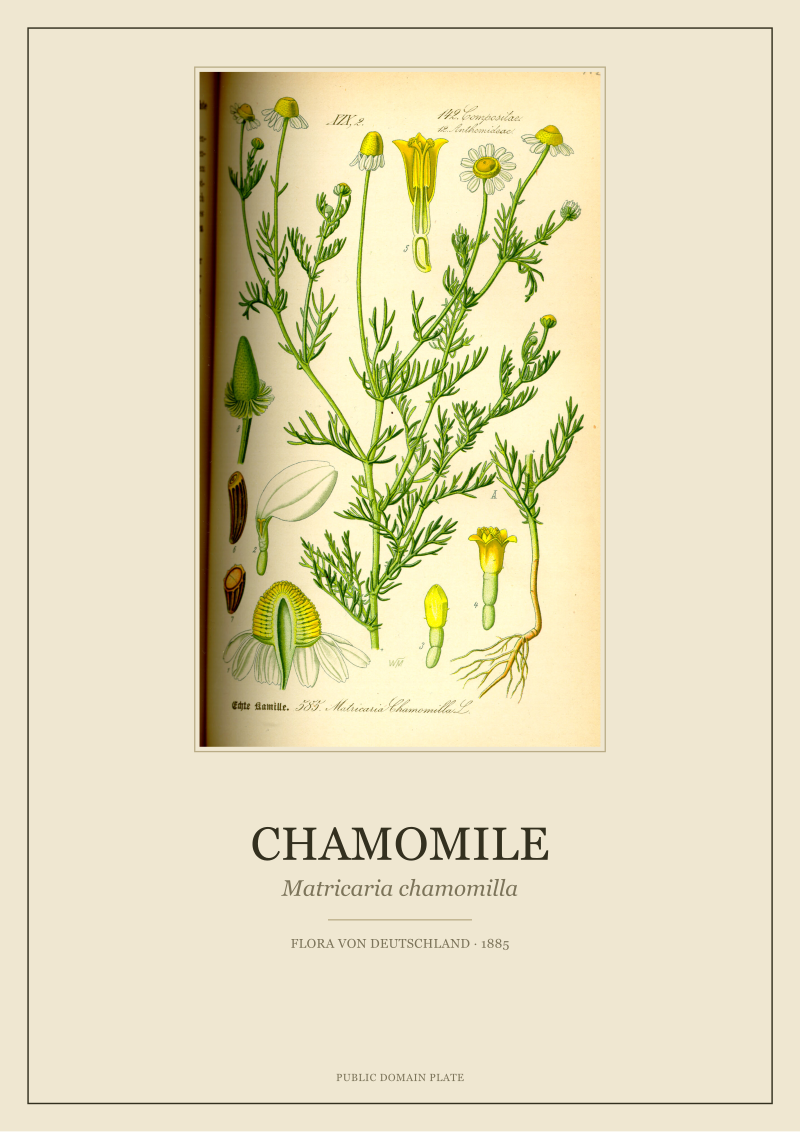 Chamomile
The print from this article · from €29.95
View the print →
FAQ
Is Thomé's Flora von Deutschland in the public domain, and can I legally print a page from it myself?
Yes. O.W. Thomé's Flora von Deutschland, Österreich und der Schweiz was published in 1885, which places every plate in the work firmly in the public domain in essentially every jurisdiction that recognizes copyright. You can download a high-resolution scan from the Biodiversity Heritage Library, send it to a print service, and hang it in your house with no legal complication. The same applies to Thomé himself as an illustrator — his death in 1925 is well outside any lingering term.
What resolution does a botanical plate need to be at to print well at A2 size?
At A2 (420 × 594 mm, roughly 16.5 × 23.4 inches) you want at minimum a 4,961 × 7,016 pixel file at 300 DPI. For a 19th century chromolithograph, we recommend aiming higher — around 600 DPI across the final print dimension — because the stipple and the stone grain in the original plate need the extra headroom to resolve cleanly. A 1,500 pixel JPEG upscaled by software will technically print at A2, but the fine botanical texture collapses into visible mush under the glass.
How can I tell if a "vintage" botanical print I'm buying online is actually a laundered JPEG?
Three tests. Ask the seller for the file's pixel dimensions in writing — a legitimate restorer gives numbers, a laundromat deflects. Reverse-image search the product photo; if the same image appears under five different studio names, the file is in general circulation and nobody is adding value. And compare the colors to the original scan on BHL, Botanicus, or Gallica. If the version for sale is noticeably more saturated, you are buying a Lightroom edit, not a restoration.
Does Botanic Walls sell rose plates specifically?
Not currently. Our studio works through Thomé's 1885 Flora von Deutschland and restores plates in a specific order driven by condition and demand — chamomile, common ivy, cornflower, and fennel are in our inventory, with others progressing through the queue. Roses, which are more thoroughly covered by Redouté and other dedicated rose floras, have not been part of our restoration scope so far. We would rather tell readers to go to Gallica than sell them a plate we have not personally restored.
Why do public-domain botanical scans at Biodiversity Heritage Library look muted compared to Etsy prints?
Because the BHL scan is the printed artifact. Chromolithography in 1885 used a limited palette of earth-and-vegetable pigments printed from six to twelve stones per plate, and the paper itself is 140 years old and has warmed with time. Marketplace sellers routinely boost saturation and contrast to make the Pinterest thumbnail more clickable, which produces a file that no 19th century press could have printed. The BHL scan is accurate; the retail version is modern-looking because it has been modernized.
Which rose illustrators have the best public-domain archives?
Pierre-Joseph Redouté's Les Roses, printed in Paris between 1817 and 1824, is the single most important public-domain rose portfolio and sits at Gallica (the Bibliothèque nationale de France's digital archive) in high resolution. For a different register, Alfred Parsons illustrated Ellen Willmott's The Genus Rosa between 1910 and 1914, now in the public domain and partially digitized. Both archives are free, both are legal to print, and both predate every laundromat listing you will encounter on marketplaces.
Is a 600 DPI scan always enough for large-format printing?
For most domestic framing up to A1, yes — a true 600 DPI file across the final print dimension holds the botanical stipple cleanly. Beyond A1, or for very fine 19th century engravings where the hatching is denser than usual, you want the original scanned at 1,200 DPI and restored at that scale, with the final export downsampled only as needed. The failure mode is the opposite case: a 300 DPI file sold as "600 DPI" after being bicubic-upsampled in Photoshop, which prints as if it were 150.
Why do public-domain rose plates matter more than contemporary rose photography for wall art?
Because a well-printed 19th century rose plate is a drawing, and a drawing on a wall behaves differently than a photograph on a wall. The lithograph reads at distance as a composed object; the photograph reads at distance as a record. Both are legitimate choices for different rooms, but if the question is which image holds up for years without feeling dated, the drawn plate — made under the discipline of a limited chromolithographic palette and a scientific framing — tends to age better than the saturated macro photograph that was in style the year it was taken.
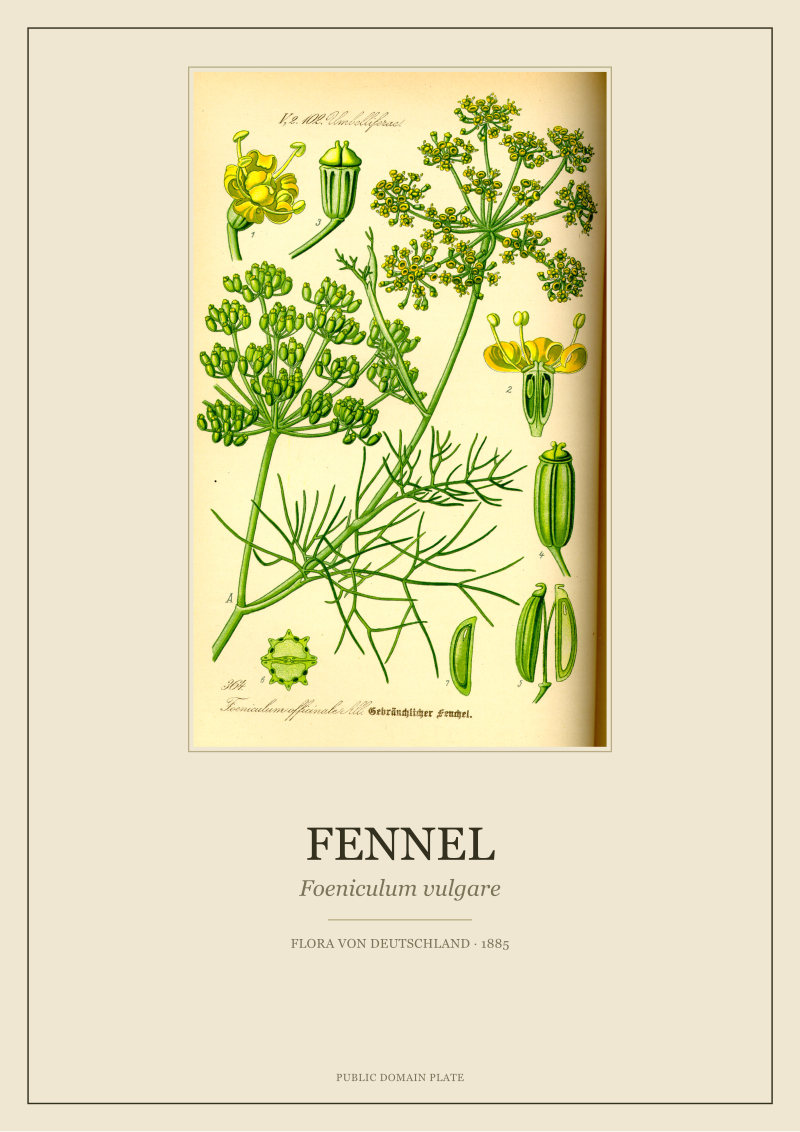
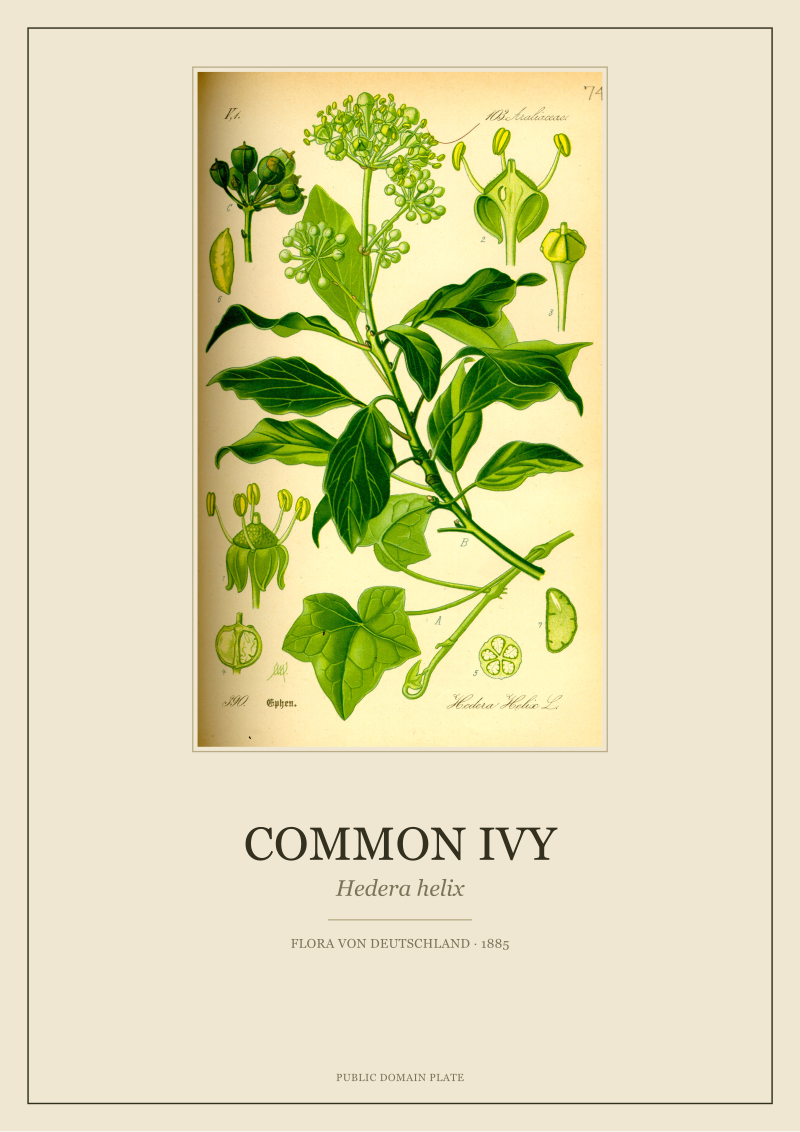
New plates from the archive and 10% off your first print.
One email now with your code. No noise after.