At 10:14 on a Tuesday morning in October, the eighth email of the week landed in the studio inbox asking the same question: can we put a Thomé plate — usually the 1885 Hedera helix from *Flora von Deutschland, Österreich und der Schweiz* — on linen for cushion covers. The honest answer is yes, with four or five asterisks, and the asterisks are the whole article. What follows is a flowchart written in prose. Three questions decide which method survives contact with reality. We would rather ask them now than refund a bolt of botched upholstery later.
Question 1: Is This One Piece, or Many Metres of Yardage?
The first fork is not aesthetic. It is industrial. A single cushion face, a single tote, a single framed textile panel is a different manufacturing problem from twelve metres of curtain fabric. We ask this first because the answer collapses roughly half the methods people read about online. The folk wisdom that "you can print botanicals on fabric at home" is technically true and operationally useless once the piece is larger than an A3 sheet or needs to repeat without a visible seam. Scale is where enthusiasm meets physics.
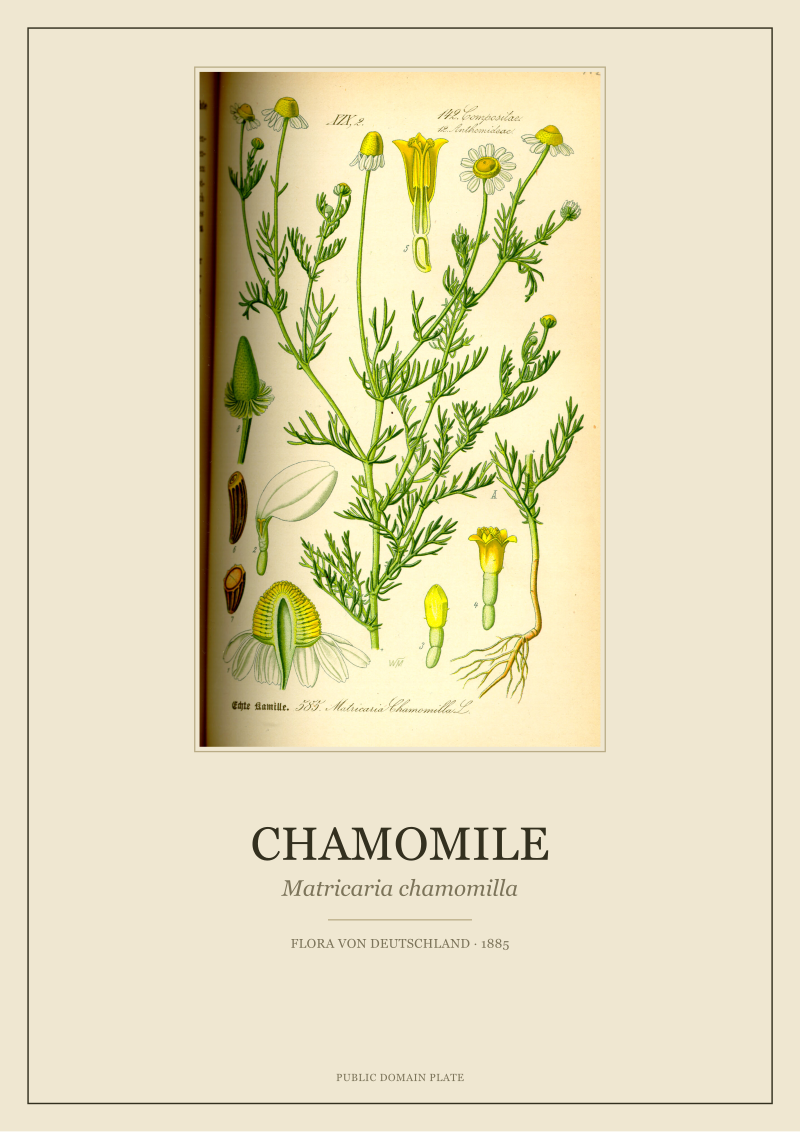
The practical dividing line sits somewhere around a square metre. Below it, almost any method works if executed with care. Above it, registration, dye penetration, drying time and colour consistency start compounding into problems that only industrial equipment solves cleanly. A plate like the chamomile — *Matricaria chamomilla*, Thomé 1885 — printed once on a tea towel is a weekend. The same plate repeated across six metres of upholstery linen is a different conversation.
If Yes (one piece, under about a square metre)
You have the full menu available. Transfer paper onto a prepared cotton or linen, direct inkjet printing with a fabric-specific coating, screen printing from a hand-cut stencil, or — the method we quietly prefer for one-off display pieces — ordering a direct-to-fabric print from a small bureau that handles cotton sateen or heavyweight linen. The piece is small enough that the cost per square centimetre is dominated by setup, not substrate, which makes bureau printing surprisingly reasonable. A single Hedera helix plate on a 50 by 70 cm linen panel, printed by a reputable textile bureau, typically costs less than framing the same image on paper. We do not say that lightly.
If No (yardage, or multiple pieces that must match)
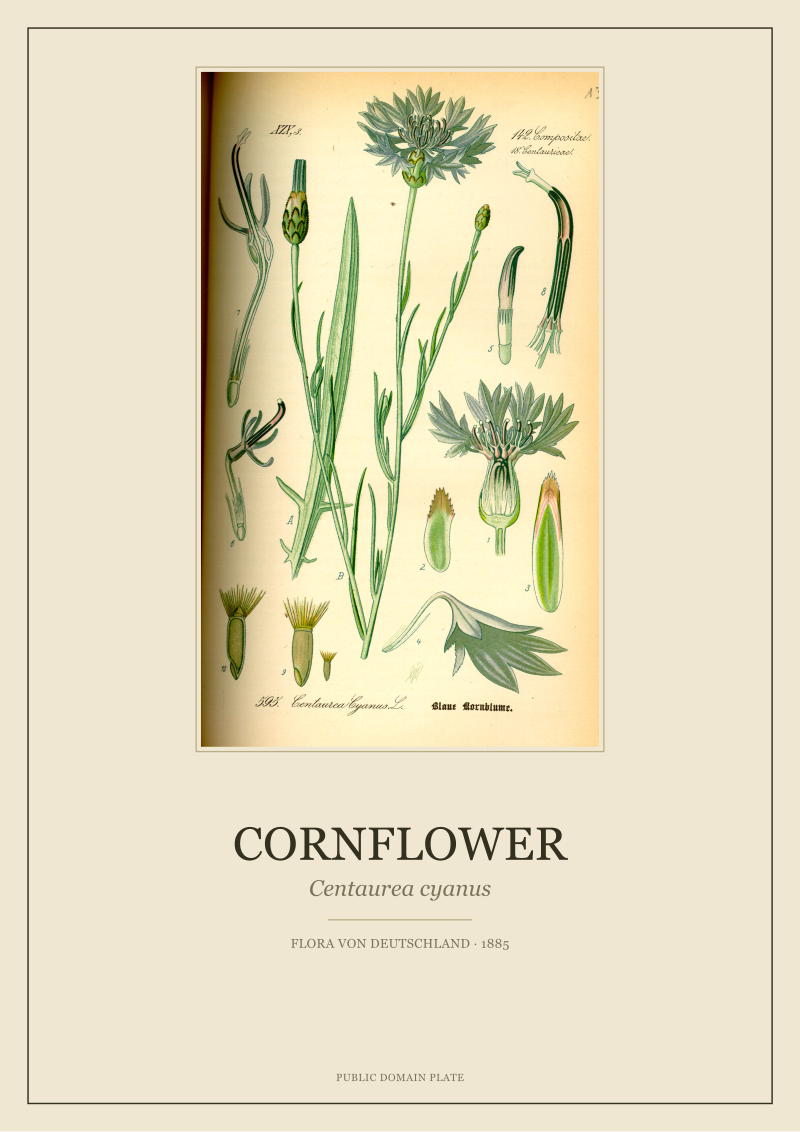
You need digital textile printing on a roll, from a bureau that handles reactive dyes for cotton and linen or pigment inks for mixed fibres. This is not a home solution. The reasons are unglamorous: colour drift across a long run requires calibrated profiling, repeat registration requires a drum or wide-format printer with sub-millimetre tolerance, and dye fixation at length requires steam setting or heat setting that no household iron reproduces. A cornflower repeat — *Centaurea cyanus*, that stubborn national-emblem blue — looks identical across six metres only if someone with a spectrophotometer made it so. We route every yardage request to a bureau for this reason.
Question 2: Will This Fabric Ever See a Washing Machine?
The second fork is where most home attempts quietly fail three months in. The question is not whether the ink is "permanent" — every seller of every method will claim theirs is permanent. The question is whether the ink is bonded chemically to the fibre or sitting on top of it. The two look identical on day one. By wash fifteen, one is a faded ghost and the other is still a plate.
Chamomile plates on kitchen linens are a case in point. We have had customers print them beautifully and then watch the florets vanish by Christmas because the method chosen did not account for the dishcloth's weekly tour of a sixty-degree cycle. Linens for the kitchen are not display objects. They are workwear. The method must match.
If Yes (washing, friction, real use)
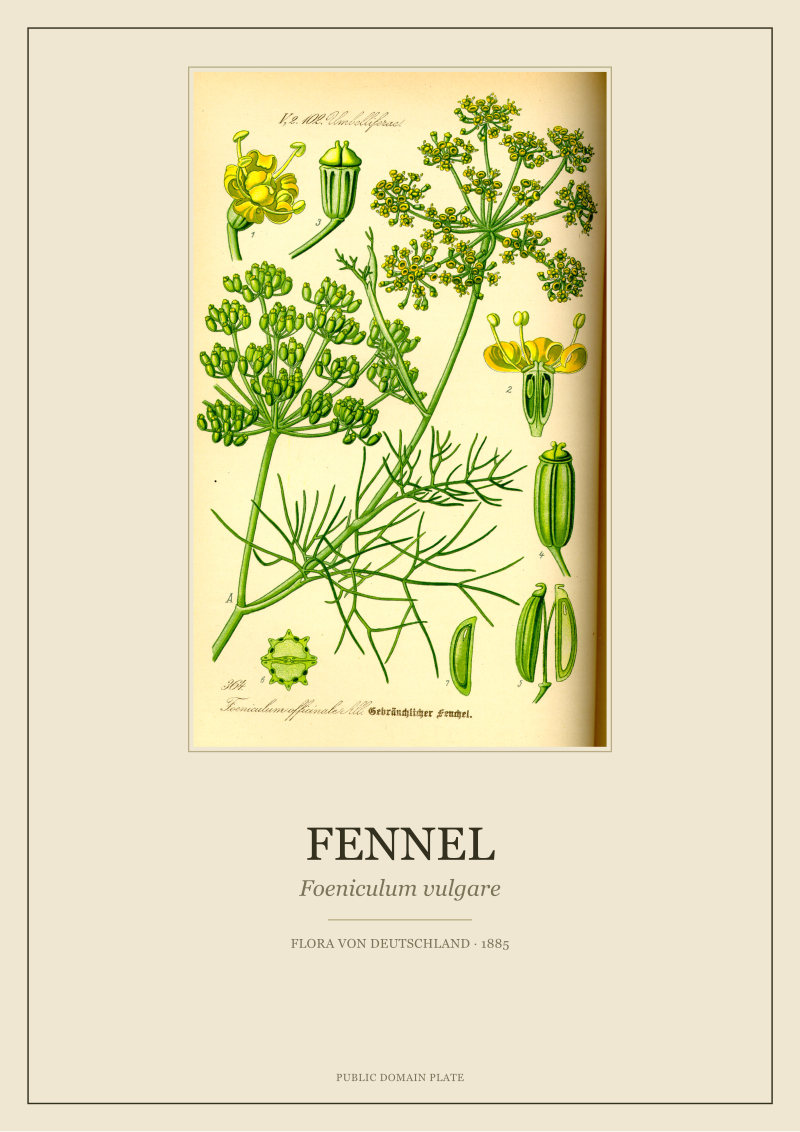
You need reactive dyes on natural fibres or pigment inks with proper heat fixation. For cotton and linen, reactive dyes are the honest answer: they bond covalently with the cellulose, which means the colour is now part of the fibre rather than a coating on it. The handfeel is unchanged. The wash fastness is high. This is how commercial printed cottons have been made for a century, and it remains the right answer for anything that will be laundered. The downside is only availability — not every bureau offers it, and it adds cost. The upside is that a fennel plate — *Foeniculum vulgare*, those umbels that look like fireworks in miniature — can still look like fennel after fifty washes. We have the samples.
Transfer-paper methods, inkjet-with-household-iron methods, and most "print your own fabric" kits sold at craft retailers do not survive this test. They were engineered for display textiles, not functional ones. Nothing wrong with that — but mislabelling matters.
If No (display textile, wall hanging, framed panel, upholstery that will not be washed)
The field opens considerably. Pigment-ink printing without full dye fixation is acceptable because the piece will never meet a surfactant. Transfer-paper methods work well on heavier linens if applied carefully. A home inkjet with pigment inks and a pre-treated cotton sheet can produce a wall-hanging-quality panel in an afternoon. The caveat is UV: display textiles live in daylight, and pigment inks fade under direct sun faster than reactive-dyed cottons do. The ivy plate hanging on the north wall of a studio is a different lifespan from the same plate on a south-facing conservatory curtain. Light is also wear.
 Chamomile
The print from this article · from €29.95
View the print →
Question 3: Are You Printing a Public-Domain Plate, or Your Own Botanical?
The third fork is the one almost nobody asks and the one that occasionally produces an unpleasant letter from a photo agency. Not all 19th-century botanical plates are legally yours to print, even when they are 140 years old. The painting is in the public domain. The specific high-resolution scan hosted by a museum or library may not be, depending on jurisdiction and the terms of that institution's digitisation. We cannot give legal advice from a botanical art desk. We can give the question.
If It Is a Public-Domain Plate You Scanned or Restored Yourself
You are on the firm end of the spectrum. The plates we restore — the Thomé 1885 chromolithographs of chamomile, ivy, cornflower, fennel — are long out of copyright on the artwork itself. If you own a physical copy of the book and scan it yourself, the resulting file is yours to use. If you have restored a public-domain scan with your own labour (dust removal, colour recovery, tear repair), the restoration itself may attract a thin new copyright in some jurisdictions, but the underlying plate remains free. This is the position our studio works from.
Practically: print it, hem it, sell it, hang it. The plant does not care, the artist has been dead for a century, and the botanical record belongs to everyone.
If It Is a Plate You Downloaded From a Random Website
Slow down. A scan hosted by a stock image agency or a decorator aggregator may carry a licence you have not read. The Rijksmuseum and the Biodiversity Heritage Library release scans with clear open terms; many commercial sites do not. The usual sign that something is wrong is a watermark you have cloned out, or a filename that still has an agency prefix. Print and personal use is one legal exposure. Print and resale is another. The ivy plate — *Hedera helix*, Thomé 1885 — exists in dozens of online scans, and only some of them carry licences that permit commercial printing. Check the source before the printer. We have had this conversation with customers twice this year, and twice this year we have had to say no to a commission we would otherwise have taken.
If It Is Your Own Botanical Illustration
Everything above is yours by default. Our only note is practical: scan at 600 dpi or better, flatten the layers before export, and print a test strip at final size before committing to yardage. Fabric eats detail in ways paper does not. A line that reads crisply on screen can turn into a smudge once ink has wicked three millimetres into cotton.
If You Answered Everything: The Recommendation Grid
Three binary questions produce eight combinations. The grid below collapses them into one concrete recommendation each. Each cell is a decision, not a hedge.
| Q1: Yardage? | Q2: Will wash? | Q3: Public domain? | Recommendation |
|---|---|---|---|
| No (single piece) | No (display) | Yes | Home inkjet on pre-treated linen, or a small bureau for a single panel. |
| No (single piece) | No (display) | No | Clear the licence first. Then home inkjet or bureau as above. |
| No (single piece) | Yes (will wash) | Yes | Order a single-piece reactive-dye print from a textile bureau. |
| No (single piece) | Yes (will wash) | No | Resolve the licence. Then single-piece reactive-dye bureau print. |
| Yes (yardage) | No (display) | Yes | Digital textile bureau, pigment-ink roll print on linen or cotton. |
| Yes (yardage) | No (display) | No | Licence first. Then pigment-ink roll print at a bureau. |
| Yes (yardage) | Yes (will wash) | Yes | Reactive-dye digital textile printing on cotton or linen, bureau only. |
| Yes (yardage) | Yes (will wash) | No | Stop. Licence resolution before any print spend. |
Two patterns are worth naming in prose. First: five of the eight paths route to a bureau rather than a home setup. Fabric printing done well is one of those crafts that looks accessible and is actually industrial, and we think the honest answer is to acknowledge that rather than oversell the kitchen-table version. Second: the licence question gates everything. The method debate is downstream of whether you have the right to print the image at all. We mention this not because we doubt our readers — we mention it because the botanical restoration world has a long memory and a short tolerance for scans borrowed without permission.
A closing note on the plates specifically. The four we hold most dear from the Thomé 1885 flora — chamomile, ivy, cornflower, fennel — behave differently on fabric. Chamomile's thin stems and small florets want a higher-resolution scan than ivy's bold lobed leaves. Cornflower blue is a notoriously difficult colour to hold accurately across a run and benefits most from a calibrated bureau. Fennel's umbels reward larger-format printing because the detail is in the branching, not the mass. Match the plate to the method, not just the method to the budget.
The next question is where this piece ends and the real work starts: what substrate are you choosing, and in which weight, and from which mill? Fabric is not neutral ground. The same ivy plate reads differently on 180 gsm linen than on cotton sateen, and both read differently from heavyweight twill. If this flowchart answered the method question, the substrate conversation is the one that comes after it, and it is the one we keep having in the studio when the printer is finally the easy part. Our own restored plates, prepared for exactly these decisions, live at see the Chamomile print when you need somewhere grounded to start.
 Cornflower
The print from this article · from €29.95
View the print →
FAQ
Can I print a Thomé botanical plate on a cotton tote at home with an inkjet?
Yes, if the tote is display-first rather than wash-first. Use pigment inks (not dye-based) and a cotton sheet pre-treated for inkjet, available from most art suppliers. Expect the result to tolerate a few gentle hand washes before fading begins. For a tote that will carry groceries weekly, the inkjet-at-home route is the wrong tool — route to a bureau that offers reactive-dye printing on cotton for a result that survives real laundry.
What is the difference between reactive dyes and pigment inks on natural fibre?
Reactive dyes form a covalent chemical bond with cellulose fibres (cotton, linen, viscose), which means the colour becomes part of the fibre itself. Pigment inks sit on the surface of the fabric, held in place by a binder. Reactive dyes have higher wash fastness and a softer handfeel; pigment inks are more widely available at small bureaus and work on blended fibres. For functional textiles that will be washed, reactive dyes are the honest answer. For wall hangings, either works.
Is the 1885 Thomé Flora von Deutschland fully in the public domain?
The original artwork and the first printing are long out of copyright — Thomé died in 1932 and the plates themselves date to 1885, placing them well past any reasonable term. A specific modern high-resolution scan hosted by a particular library or stock agency may carry its own licensing terms in some jurisdictions. If you scan or restore a plate yourself, you are on firm ground. If you pulled a file from a random website, read the licence before committing to print.
Will the colours drift across a long run of yardage?
They can, which is why yardage belongs at a bureau rather than at home. Across six metres of fabric, uncalibrated printers produce visible shifts in hue — the cornflower blue of *Centaurea cyanus* is particularly unforgiving because the eye detects even small blue drifts. A bureau using spectrophotometer-calibrated digital textile printing holds colour across a run within professional tolerances. A domestic inkjet printing panel after panel does not.
What resolution should the plate file be before printing on fabric?
Fabric is less forgiving than paper because ink wicks into fibres and blurs fine lines. We work at a minimum of 600 dpi at final print size for the plates we restore, and we flatten all restoration layers before export. For a chamomile plate printed at A2 on linen, that is a file of roughly 11,000 by 15,000 pixels. Scanning below 300 dpi at final size produces fabric prints that look softer than the original plate, which defeats the point.
Can I print on linen as easily as on cotton?
Linen takes digital textile printing well but behaves differently from cotton. The fibre is coarser, which means fine detail softens slightly more than it does on tight-weave cotton sateen. Pigment inks sit nicely on heavier linen weights (around 180 to 240 gsm) and the result reads as suitable for upholstery or heavy curtains. Reactive-dye printing on linen is available at specialist bureaus but less common than on cotton. Test on a swatch before committing to yardage.
Do I need to pre-wash the fabric before printing?
If you are printing at home with pre-treated inkjet fabric sheets, no — the pre-treatment is the preparation. If you are supplying your own linen or cotton to a bureau, most bureaus prefer unwashed fabric and will handle any necessary preparation themselves, because sizing and finish affect how their inks take. Washing beforehand can strip finishes that the printing process relies on. When in doubt, ask the specific bureau rather than assuming.
How many plates can I combine before a textile looks crowded?
Fewer than you think. A single plate repeated across yardage reads as a confident pattern; three or four plates mixed on one panel often read as a sampler rather than a textile. We tend to recommend one plate per piece for cushions and panels, and one plate as a repeat for yardage, with scale and spacing varied rather than the plate itself. The ivy, chamomile, cornflower and fennel are strong individually; mixing them within a single textile dilutes each one.

New plates from the archive and 10% off your first print.
One email now with your code. No noise after.